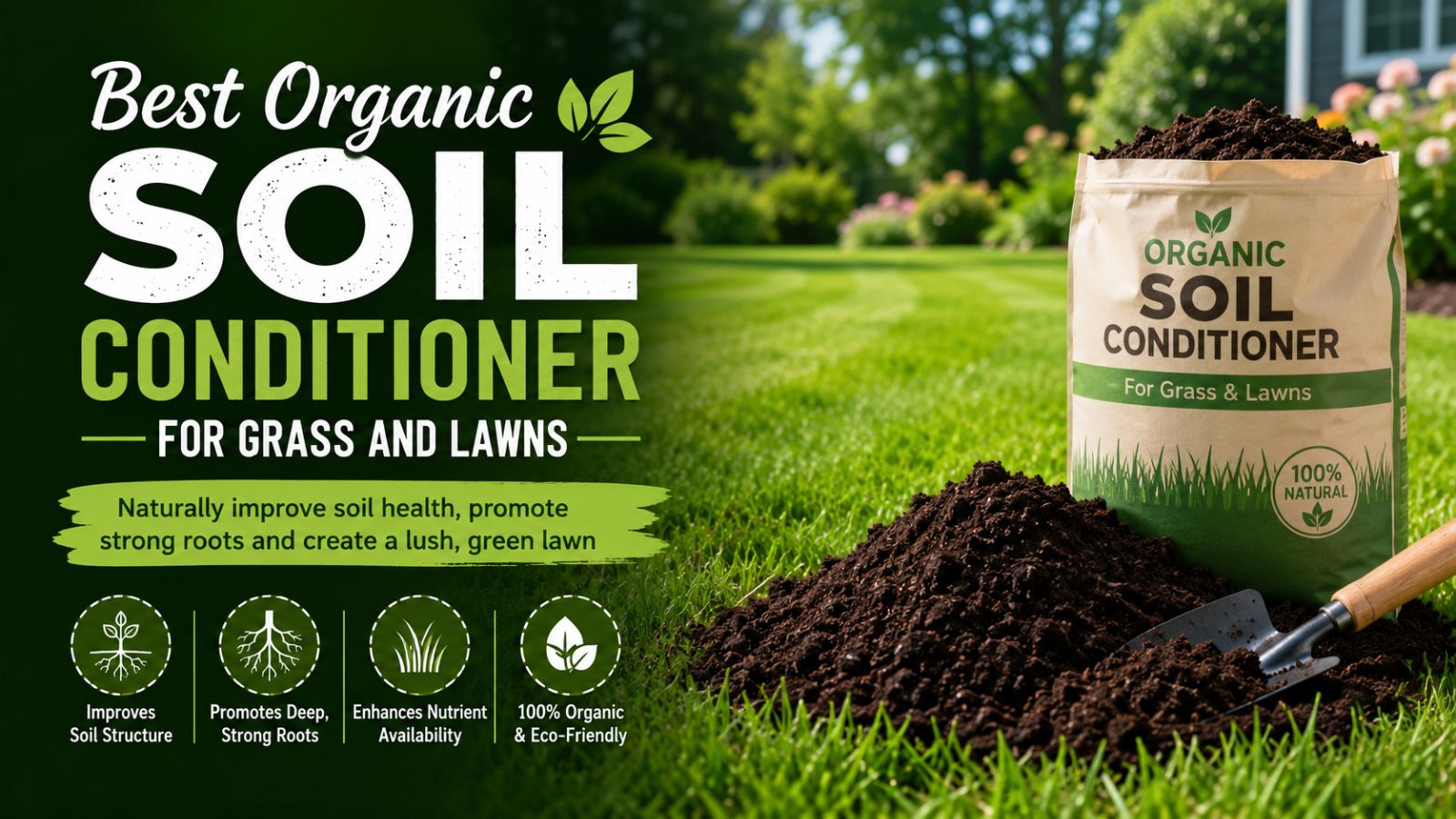
Best Organic Soil Conditioner for Grass and Lawns: How to Choose the Right One in 2026
If your lawn is struggling with patchy growth, standing water, or grass that turns yellow no matter how much fertilizer you apply, the problem might not be above ground. In 2026, professional turf managers and home gardeners across the USA are shifting their focus from quick-fix chemical fertilizers to long-term soil health. The secret to a lush, resilient lawn lies in the foundation: using a high-quality organic soil conditioner.
Adding a soil enhancer to your lawn care routine restores the natural ecosystem beneath the surface. It breaks up heavy clay, improves water retention in sandy soils, and unlocks dormant nutrients so your grass can thrive.
In this comprehensive buyer's guide, we break down what a natural soil conditioner does, why your lawn needs one, how to choose the best option for your turf, and how to apply it for maximum results this season.
What Is an Organic Soil Conditioner? (And How It Differs from Fertilizer)
A common mistake homeowners make is assuming that fertilizer and a conditioner soil treatment do the same job. While both are critical for a healthy lawn, they serve entirely different functions:
- Lawn Fertilizer: Acts as food for the grass. It delivers primary macronutrients—nitrogen (N), phosphorus (P), and potassium (K)—directly to the plant for quick green-up and leaf growth.
- Organic Soil Conditioner: Acts as a builder for the soil. It improves physical soil structure, boosts Cation Exchange Capacity (CEC), increases aeration, and fosters beneficial microbial populations.
Key Takeaway: Fertilizer feeds the plant; a soil conditioner for grass feeds and fixes the soil. If your soil is compacted or nutrient-depleted, fertilizer simply washes away without reaching the root system.
Why Your Lawn Needs a Natural Soil Conditioner in 2026
Modern lawn care challenges in the United States—ranging from severe summer heatwaves to water restrictions—require soil that can hold moisture and sustain root growth under stress.
┌─────────────────────────────────────────────────────────────────┐
THE SOIL HEALTH CYCLE
Compaction / Poor Drainage ──> Poor Root Penetration
▼ ▼
Apply Soil Conditioner ──> Unlocks Nutrients & Water
▼ ▼
Deep Root System ──> Dense, Lush Green Turf
└─────────────────────────────────────────────────────────────────┘
Here is how incorporating an organic soil conditioner transforms your turf:
1. Relieves Soil Compaction
Heavy foot traffic, lawnmowers, and heavy clay soils cause compaction over time. Compacted soil starves roots of oxygen and prevents water penetration. A premium natural soil conditioner creates micro-porosity, allowing air, water, and nutrients to move freely to the root zone.
2. Boosts Water Retention and Drainage
For sandy soils, water runs through too quickly, carrying nutrients with it. For clay soils, water pools on top, leading to root rot. A quality soil enhancer acts like a sponge—retaining optimal moisture in sandy grounds while improving drainage in dense clay.
3. Activates the Soil Microbiome
Synthetic chemicals often strip the ground of essential microbes. Organic soil amendments reintroduce humic substances, kelp, and beneficial fungi that convert locked-up minerals into plant-available forms.
To explore top-tier, eco-conscious formulas designed to revitalize damaged turf, browse the complete lineup at Evergrow Soil.
Key Ingredients to Look For in the Best Soil Enhancer
Not all soil treatments are created equal. When shopping to buy an organic soil conditioner online or at your local center, evaluate the ingredient list against these proven soil-building components:
|
Key Ingredient |
Primary Benefit for Lawns |
Ideal Soil Type |
|
Humic & Fulvic Acids |
Chelates nutrients, increases CEC, and boosts root elongation |
All soil types (Clay, Sand, Loam) |
|
Composted Organic Matter |
Adds vital carbon, improves soil structure, and retains moisture |
Depleted or sandy soils |
|
Kelp / Seaweed Extract |
Stimulates natural hormone production for stress resistance |
High-heat or drought-prone lawns |
|
Mycorrhizal Fungi |
Expands root surface area by up to 100x for better nutrient uptake |
New grass seed & established lawns |
When choosing a concentrated, professional-grade solution, options like the Evergrow Soil Enhancer combine high concentrations of active humic materials and organic compounds specifically balanced for grass root development.
How to Choose the Right Organic Soil Conditioner for Your Lawn
Selecting the best soil conditioner for grass depends on your specific soil profile, grass type, and seasonal goals. Follow this step-by-step evaluation framework:
Step 1: Identify Your Soil Type
- Clay Soil: Look for liquid or granular liquid humates with calcium or gypsum blends to loosen tightly packed soil particles.
- Sandy Soil: Choose organic amendments rich in carbon, biochar, or compost extracts to build organic matter and hold water.
Step 2: Liquid vs. Granular Conditioners
- Liquid Soil Conditioners: Ideal for quick root absorption, easy hose-end spray application, and mid-season maintenance.
- Granular Soil Conditioners: Best for long-term release, core aeration recovery, and early spring or late fall lawn prep.
Step 3: Match Your Grass Category
- Cool-Season Grasses (Kentucky Bluegrass, Fescue, Ryegrass): Benefit most from soil conditioning in early spring (March–April) and early fall (September).
- Warm-Season Grasses (Bermuda, Zoysia, St. Augustine): Thrive when conditioned during active growth in late spring through mid-summer.
To discover tailored solutions for your specific lawn type, check out the specialized collection of organic soil amendments curated for residential lawns and organic gardens.
Step-by-Step Application Guide for Best Results
To get the highest return on investment from your natural soil conditioner, timing and application technique matter.
- Perform a Quick Soil Test: Check your soil pH (aim for 6.0 to 7.0 for most grass types).
- Mow and Aerate (Optional but Recommended): Aerating your lawn prior to application creates direct channels for the soil enhancer to penetrate deep into the root zone.
- Apply Evenly:
- If using liquid, spray evenly across the lawn during early morning or late afternoon to avoid rapid evaporation.
- If using granular, use a broadcast spreader and water thoroughly afterward with 1/2 inch of water.
- Combine with Overseeding: Applying an organic soil conditioner alongside grass seed significantly boosts seed germination rates and seedling establishment.
Frequently Asked Questions (FAQs)
1. How often should I apply an organic soil conditioner to my grass?
For established lawns, applying a natural soil conditioner 2 to 3 times per year (Spring, Summer, and Fall) yields the best results. For severely compacted or poor soils, monthly liquid applications during the growing season can accelerate recovery.
2. Can I apply a soil enhancer at the same time as lawn fertilizer?
Yes! In fact, applying a soil enhancer alongside fertilizer improves nutrient efficiency. The organic acids bind to the fertilizer nutrients, reducing runoff and making the fertilizer more accessible to grass roots.
3. Is an organic soil conditioner safe for pets and children?
Quality organic soil conditioners made from natural humic compounds, compost extracts, or kelp are non-toxic and eco-friendly. Always allow liquid sprays to dry completely before letting pets or children onto the lawn.
4. How long does it take to see results after applying a soil conditioner for grass?
Liquid soil conditioners show visible grass vigor within 7 to 14 days as root activity increases. Physical soil structure improvements (like reduced compaction and better water absorption) develop over 4 to 8 weeks of consistent use.
5. What is the difference between topsoil and an organic soil conditioner?
Topsoil adds volume to low spots, whereas an organic soil conditioner is a concentrated formula designed to improve the biological and chemical performance of your existing soil without altering ground levels.
Evergrow Soil
- Address:- EverGROW Soil, LLC PO Box 3147, Bonners Ferry, ID 83805
- Phone:- 208-920-3556
Invest in Your Soil for a Healthier Lawn in 2026
Achieving a vibrant, dark-green lawn doesn't require pouring heavy synthetic chemicals into your yard. By treating the root cause of lawn failure—poor ground quality—with a high-performance organic soil conditioner, you build a resilient lawn that withstands heat, drought, and disease naturally.
Ready to transform your lawn from the ground up? Explore expert-formulated products, guides, and lawn solutions directly at Evergrow Soil today.